Tuesday, July 1, 2014

The Art Of Growing Old by Herbert Vander Lugt

One characteristic flaw of humankind is our tendency to take a lot of things for granted especially regarding the cycles of life. We typically assume that once a child is born, she will grow up sane and strong, attend school and graduate, get a good job and then marry and start her own family, then she’ll succeed in her career, grow old and eventually die at a ripe old age. This repetitive nature of certain events of this life is well documented by The Teacher in the book of Ecclesiastes who laments the utter futility of these cycles. They are all vanities he says.

Reality however has a way of yanking us out of this enshrined orientation of taking things for granted by the many failures and disappointments we encounter as we age. Yet, our grief from these heartbreaks could have probably been rendered more bearable had we be somewhat open-minded about life’s uncertainties.

The late author Herbert Vander Lugt in this short book, The Art of Growing Old, shares his experiences and that of other senior citizens on some of the possible pitfalls of old age and offers sound advice on how to deal with them. He notes an unfortunate pattern among many people especially those in their late forties and early fifties who are often forced to brood over the implications of their personal mortalities only when tragedies strike. He observes that, “the awareness of life’s brevity may come with a jolt when a person finds out he has high blood pressure or other physical problems that are usually associated with aging,” which statements rings too true!

The author observes that, many intentionally avoid discussing and planning for their old age because such inevitably must include debilitation and death, which themes are deemed too morbid and depressing, yet this ought not to be the case especially for the Christian. He asserts that “a Christian who properly faces the reality of departing this life, acknowledging it openly and cheerfully will not get sour on life or develop a fixation on death and dying.” Christians ought to be confident that when they depart this life, they are going to be with their Lord.

Even though death preoccupies the thinking and planning for old age, it’s not all about it. There are many positive benefits to growing old. Freed from the pressure of making a living or raising a family, we can use much of this time for personal growth and spiritual impact. For instance, the author shares the story of a man he personally knew whose joy seemed to abound after retiring because now, he had ample time to embark on evangelism and other missionary works. Apart from this, old age also affords one the quality time to spend with one’s grandchildren(kids always love their grandparents), ample time to volunteer for and support worthy causes, to coach and counsel young ones in their life decisions and so on.

As a relatively young person, I found The Art of Growing Old very helpful as I was opened to certain realities of life in a fresh way by the author’s measured tone in dealing with this topic which inspired in me a much welcomed sober cogitation.

I agree with Herbert Vander Lugt when he says that old age “can be happy and useful if we plan for the adjustments it will demand and utilize its new opportunities to glorify God.” Do give this book a read if you do come across it!


Wednesday, June 25, 2014

Book Review: Crazy Busy By Kevin DeYoung

“So much to do, so little time” is a sentiment that resonates with many of us because increasingly, it appears our duties and responsibilities are piling by the minute. Let’s face it; ‘busyness’ is the oft cited off the cuff excuse for our failure to perform a task.


One would think that with all the influx of easily accessible information and all our technological advancements and breakthroughs, our lives would be less frantic and less hurried, yet the converse appears to be the prevailing status quo. In fact, there are times that we absent mindedly wished there were more hours than the 24 in a day to enable us do just a little bit more. It makes one wonder, why is modern man so beset with busyness? Why does it feel like there is never enough time? Why are we so busy?
Thankfully Kevin DeYoung recognizes these tough questions and attempt to address them in his aptly titled book, Crazy Busy: A (Mercifully) Short Book about a (Really) Big Problem, and that’s what it really is, a BIG problem.

In this book, DeYoung offers readers a goodly dose of godly and theologically sound counsel with a healthy mix of common sense on how to deal with this canker of busyness. He shares his observations not as an indifferent bystander but as one who has had (and is still having) a firsthand experience of the effects of busyness, yet does so in a manner unlike your typical self-help books with their slick ’20 Ways’ or ‘7 Steps’ howtos.

In an era where it is usually deemed condescending for one to opine on a topic one hasn’t personally experienced, readers will find the author’s tone refreshingly personal and down-to-earth, one that anyone can well identify with for if anyone knows and have felt the overwhelming pull of busyness, DeYoung surely qualifies as one. He is a husband and father of five, a senior pastor, a prolific author and blogger and also currently pursuing a doctoral program. With each category cited above having its own accompanying challenges, he’s definitely got his plate full. Little wonder he readily admits that “more than any other book I’ve worked on, this one is for me.”

Crazy Busy examines the various forms busyness take in our lives while stealthily gnawing at the joys we have and proffer sound counsel on how to deal with them. Indeed, the author is right when he observed that “when our lives are frantic and frenzied, we are more prone to anxiety, resentment, impatience and irritability” which invariably affect those closest and dearest to us. Perhaps DeYoung may have been right when he asserted, “busyness kills more Christians than bullets.”

With mothers for instance, it looks like the house never stays clean. The dishes and laundry never seem to be done. The kids always needing our constant attention and especially the infant who never seems to stop crying and for the life of you cannot figure out what is wrong with her. And oh, you also gotta help the kids finish their homework. Then there is also that recipe that everyone is talking about which for some unknown reason you haven’t been able to add to your menu. And then there are Facebook friends and Twitter trends to catch up with…and on and on it goes seemingly ad infinitum until the point of despair when you begin to feel like you’re spiraling to your doom. These are more than enough triggers to make anybody go crazy. I agree with DeYoung that “busyness can ruin our joy.”

The bottom line is, we all have targets to meet and deadlines to beat and with our existing  state of affairs, it looks like busyness is here to stay but thankfully we have such useful tools like Crazy Busy to help us navigate those rough times before we are sucked into its resultant abyss of despair.


Readers will certainly find Crazy Busy immensely helpful. The question though is; will they make time out of their busy schedules to actually read it? I can only hope they do! 

Monday, May 26, 2014

Book Review: Tales From Different Tails By Nana Awere Damoah

Today is AU Day and perhaps, the only good thing about this day is that, it’s a holiday and it has afforded me the opportunity to read an African novel. And this one was certainly a fun read.

Tales From Different Tails is Nana Awere Damoah’s third book and is a collection of 8 short stories whose central theme could be said to be relationships. These stories hovered around motifs as bitter betrayals, cunning maneuvers, tenacious trust and loyalty among other such traits that are common to most relationships, all told in the quaint by-the-fire-side style of storytelling which always carries a moral lesson.

Any Ghanaian, especially those who have had the privilege of attending any of our ‘traditional’ universities and other tertiary institutions, will readily identify with the characters in these stories as a lot of the events Nana describe are still recurrent today. At least that was the case during my time at school. Brother Bazook (a character in October Rush) particularly touched a raw nerve as his depiction hit a little too close to home.
Nana employs a lot of local jargons like ogyacious, aponkye brake, tweah (which term has now attained international renown thanks to the infamous Gabriel Barima), toke, inte, among others. The one transliteration I found particularly humorous was attributed to Sulley Maame, the waakye seller, who sometimes sold her waakye on credit to loyal customers only to be “paid back at moon die,” to wit the end of the month. It is such jargons that gives Tales From Different Tails its quintessential Ghanaian feel.

There were points in the novel where I felt that the stories were “so real yet so fictitious” like Adadewa’s concocted lies against Kojo Nkrabeah. For instance, Akosua (a main character in Guardian Of The Rented Well) shared such striking similarities with the author that I couldn’t help but wonder if she was a replica of the author and that this tale was a recounting of a real past incident in the author’s life…I guess I may never know!

The telltale title of this book coupled with its spellbinding stories offered me just the humor break I needed today and I betcha gonna enjoy it too…go grab your copy!


Monday, April 28, 2014

Book Review: Treasured Friends By Ann Hibbard


Women all over the world suffer myriads of stereotypes and often these mostly unfounded mental conceptions tend to be more pronounced in the hinterlands where education is deficient. One such seemingly entrenched stereotypical conception is that women are inherently quarrelsome, so much so that, we tend to view feuds between women as completely ordinary and hence downplay the many possible adverse consequences of such bitter disputes because we somewhat unconsciously deem them normative.

However true or otherwise the above may be, I am of the opinion that women generally make better friends than men based on my personal unscientific observation and Ann Hibbard in her book Treasured Friends corroborated my hunch, though her work is by no means a comparative study/analysis of the sustainability of friendship among the two sexes.

In Treasured Friends, the author marshals a wealth of information from her personal stories and the testimonies of numerous other women she has encountered from her many speaking engagements to make a solid case for building intimate friendships.

She begins the book by sampling the views of some of the women on what they considered true friendship noting among other things that, “some use the term friend loosely to mean anything from acquaintances to lifelong soul mates.” As varied as the views were, one of the most recurrent themes in their responses was that true friendship teaches us to love. Ann beautifully encapsulates it thus, “Love is learned in the crucible of human relationships: a place where we bind each other’s wounds, clothe each other with humor, nourish each other with encouragement and quench each other’s thirst for acceptance and companionship.”

Commencing every chapter with a catchy and concise quote, Ann explores key ingredients like trust, love, acceptance, kindness, respect, etc that make for a healthy and intimate friendship yet in a manner that is not all niceties. Like in every human relationship, this book attempts to capture every aspect of true friendship, warts-and-all, thus giving it a realistic appeal. For instance, she advises that “anyone can say what we want to hear. A true friend tells us what we need to hear. Yet every word is prompted by love.” She also warns against parasitic friendships and suggests ways to cut off such ones observing that it is “better to go deep with a few than to have superficial relationships with many” especially “when continuing in a friendship necessitates participation in wrong behavior.”

As beautifully and as well written as this book may be, I strongly suspect that not many men will find it appealing because like me, they may think it too feminine. Even though men will lose nothing for reading it but rather stand to glean some invaluable lessons from an exclusively feminine perspective to better their own relationships, the book, right from the cover page through to the blurb at the back of the book and the numerous examples and stories in between all told in very flowery language seem to be skewed toward only female readers and probably purposely so. This in my opinion does not take anything away from the book but could probably count for one of its strengths in addition to it being strongly founded on biblical principles and its easy readability.

In the end, I think Ann Hibbard does a great job in her treatment of this topic and is timely piece for our Technological Age where relationships are built on social media behind the safety of our computer screens, making us probably more isolated than ever. 

I thoroughly enjoyed this book and I recommend it to all ladies especially those who are keen on building intimate friendships. I am willing to lend my copy to any of my lady friends who are interested to give it a read. Just holler at me!

Tuesday, April 15, 2014

MY EASTER MEMOIRS

I grew up in a good Christian home where every year, two very important events marked the highlights of all activities on the calendar namely, Christmas and Easter. Christmas is usually the most anticipated time of the year and it is always marked with cheerful exchange of gifts amidst lots of merriment and joyous celebrations. This is probably due to the universal acceptance that the season enjoys as it typically tends to be a period of brisk economic activities when traders sought to maximize profits.

For some people, Christmas is simply a cozy holiday season when one sits back to take stock of the year’s activities and for others it marks the culmination of the successes chocked during the entire year and thus a good time to be grateful and to be spent  with the family. The story of Easter, however, is not quite the same.
Easter has traditionally been a somber period. It doesn’t typically enjoy the same exuberance with which Christmas is embraced yet the reason for this seemingly lackadaisical reception may not be so obvious.

Could it be that Christians have successfully maintained the season’s core purpose of serving as a memorial for the agony of their risen Savior and hence its somber nature? Is it because the period is so inherently associated with suffering and death, which are by no stretch of the imagination a merry affair? Or it may probably be due to its muddled pagan origins which detractors trumpet without fail during the season thus dampening the otherwise celebrant moods of many while making some lose faith in the whole celebrations altogether.

I remember I used to see people (usually elderly women) adorned in funeral cloth with very mournful countenance – in fact, some do even wail disconsolately – in certain mainline churches especially on the Good Friday. It makes one wonder, is it some sort of a cruel irony that this day is tagged “good” when the prevailing mood on the day is palpable sadness? Or is it that the true essence of the day is lost or probably misplaced?

I can surmise then that the melancholic milieu of Easter festivities is culpable for its seemingly poor reception because it paints a picture too gloomy for many to readily embrace. Ours is a generation in pursuit of happiness and lofty dreams thus we are very intolerant of any negativity that we perceive could mar our pollyannaish aspirations. So at worst we reject outrightly anything that threatens our happiness and at best resort to rebranding or undergoing a total makeover that appropriately suits our jolly taste.

Is it any wonder then that in Ghana today, Easter is synonymous with joyous festivities in Kwahu? It used to be that in the period nearing Easter celebrations, most ads on TV and radio were about upcoming church conventions and various outreach missions but that is fast changing and giving way to more modern trends. Thus, it is not uncommon to hear ads about paragliding that promises a thrill of a lifetime or those other popular ones in the line of “Easter Jam At Kwahu Featuring Sarkodie and Kojo Antwi…” among others.

Is this new trend good? Well, that will depend on who you ask. For the savvy business man or event organizer, this is just another golden opportunity to rake in large profits. For the insatiable hedonist, it’s just one more reason to party! For the Minister of Tourism, it’s a great time to showcase to the rest of the world the best the country has to offer in order to attract more tourists and investors. For the priest, it is just one more reason to bemoan the adulteration of an otherwise sacred Christian ritual through unholy worldly influences whereas for the zealous young Christian, it’s a good opportunity to intensify evangelistic efforts to bring more lost souls into their fold. I guess it’s all a matter of perspective.

In the end though, Easter like any other period, is a good time for Christians to ponder the costly sacrifice of their beloved Saviour that purchased their redemption. Whether you are going to mark this period with intense fasting and prayers or in a pensive Sabbatarian mood or as a jolly good time with family and close friends, do it all to the glory of God with the Christ crucified as your sole focus!

Happy Easter to all…


SDG!

Thursday, February 20, 2014

Book Review: Rich Dad's CASHFLOW Quadrant by Robert T. Kiyosaki

Anyone who is familiar with my reading interests may very well know that motivational book and tapes aren’t my passion. This is because I’m convinced they achieve no useful purpose other than giving people what I term a ‘feel good’ effect. A friend once aptly captured in my view what best represents what these motivational speakers do saying they are just selling hope – and a false hope at that – to a desperate people. So you can imagine my surprise when this same friend strongly recommended I read a book by an author I’ve always perceived a motivational speaker. Ye the conviction with which my friend spoke and the evidence of the benefits he’d been reaping by applying the lessons he’d learned from the author was compelling indeed so I decided to take him at his word to read the book and boy, what an insightful read it’s been!

Rich Dad’s Cashflow Quadrant, the sequel to Robert T. Kiyosaki’s best seller Rich Dad Poor Dad, is my second encounter with the author having read the first in the series sometime in the past while I was still in school. The book to my surprise didn’t fit my preconceived notion of a typical motivational book as it was very realistic in tone and down-to-earth in its practicability.

The author takes time to introduce the reader to the four parts of the cashflow quadrant i.e. E for Employee and S for Self-Employed on the left side of the quadrant with B for Business Owner and I for Investor on the right side while expounding on the pros and cons of each part. Though he doesn’t quite come clear on which part of the quadrant is best (as he assures the reader that no part is without its risks and gains), it wasn’t difficult to deduce that he favored the right side of the quadrant over the left side and even on the right side, the author favored the I over the B. Here, I often felt the author was playing fast and loose with his analysis and frustratingly so. I also found certain portions of the book to be needlessly repetitive almost to the point of being boring.

However, unlike your typical motivational book where readers are psychologically induced into a transient optimistic mood with the aim of jolting readers to action (often prematurely), the author advocates taking what he calls “baby steps” instead of giant leaps when venturing into a new quadrant. He underscored the importance of extensive and continuous education and knowledge acquisition with adequate experience because certain rules that may have been effective in one quadrant may prove ineffectual to one’s loss in another quadrant.

The author also shares many pithy quotes from his Rich Dad urging what may very well be unorthodox advice among motivational speakers such as “be prepared to be disappointed” because “only fools expect everything to go the way they want.” He observes that “just as we learn from our mistakes, we gain character from our disappointments” and that inevitably, “losing is part of winning.”

The crux of the whole book for me was succinctly expressed under the section he sub-titled BE˃DO˃HAVE where he teaches readers to spend more time acquiring the right attitude required to achieve the desired end instead of hastily seeking a shortcut by doing what one thinks will achieve a desired end. The end result of such impulsive action he noted is usually a burnout causing one to abandon one’s dreams even before one has truly started.


Cashflow Quadrant was a real eye-opener and I recommend it to all especially the financially naïve and for new business owners. May be it’s time I heeded the advice of the author to “mind my own business.” 

Thursday, February 13, 2014

Chale What's Your Guy Name

I recently visited a friend at his office, only to serendipitously bump into an AMOSA who was my friend’s colleague. This chance encounter drum home the trite remark that “it’s a small world” we live in. We exchanged pleasantries and carried on with a hearty chitchat. During our chat I realized that I did not remember his name. And so I did what I knew how to do best: I feigned knowledge of his name, while trying hard to recollect, yet engaging him with a phony smile. Halfway through the conversation, I mustered the courage to confess my ignorance. He just smiled knowingly and told me his name. I sheepishly exclaimed “Ah yes!” as though I was at the edge of recollection. Thankfully, this little gaffe did not dampen our chitchat till I took my leave.
Picture |Courtesy Yujin Evans

On my way back home, I tried to figure out why I generally found it a bit more difficult to recollect the names of my mates from Senior High School as compared to those from my Junior High School. The most obvious reason was that, I spent much longer time with my mates from JHS than I did my SHS mates since most of them were the same people I attended primary school with. Thus typically, I tend to remember and mention their names in full whenever I bump into any of them. Secondly, there were fewer of us in JHS than in SHS since we tended to have smaller class sizes. In JHS, the general population of the school was not very large so it was not a very difficult task getting to know almost everybody in the school. The third reason which I also thought it most fascinating was the prevalent usage of nicknames in SHS which incident was almost non-existent in JHS.

Sometimes referred to as ‘guy-name’ or ‘nicki’, the use of nicknames in SHS was commonplace and oftentimes preferable even to one’s proper name and they came in great assortments ranging from such cool ones as Shaker, Phastbone, DKNY, Khemistry, Dada Bee, Commotion, Paul Saul among others to very bizarre ones like Oshɛwoho, Bordordor, Digestive, Anyaa Popo, Odompo, Teefoi, Kontomire, Bazaywa etc and to the downright obscene like Twɛdash.

Some of these nicknames, as ridiculous as they were, often reflected certain aspects of the bearer’s quirky mannerisms or physique. Examples included names like Obaa Yaa, Nana Borrow, Onyintus, Azaa Bobby,Shro, One Muscle, Lil Chicken, Skelebo, Nana Nyankopong among others. Some too were infamous for their notoriety and cruelty. Those that readily come to mind are Pinky, Okonkwo, Wadada, Shanton and Nana King (whose nickname later metamorphosed into Serebour). There were also those people whose proper names were often mistaken to be their nicknames. Classic examples were Batsa and Kaiser.

The teachers were not exempted from this phenomenon. Apart from the obvious motive to ridicule, giving teachers these nicknames had the added advantage of affording students the leeway to jeer at teachers to their hearing, while they remained oblivious to the mockery directed at them. Some of the popular nicknames were Kriss Kross, Alonzy, Tampico, Abeezi, Prokayo, Barbie, Mɛdem, Iron, Aggrey Goat, Aggrey Bouncer, Auntie Faustie and what have you. Even the headmaster and his assistants were not spared. The headmasters usually retained the standard ‘Headzee’ nickname. I hear the immediate past headmaster was called ‘Worfa’. I also recall there was the ever dreaded ‘Payaa’. Some of the teachers were well aware of their nicknames and sometimes affectionately responded to them when students cheered them on during special occasions like the Speech Day celebrations.


So now tell me, with this plethora of nicknames laden with fond memories, is it any wonder then that i am unable to recall the names of my old school mates?

Thursday, February 6, 2014

Cry, The Beloved Country By Alan Paton

What’s The Story About?

Stephen Kumalo is a priest in the little village of Ndotsheni where very little happens. One day he receives a letter from another parson, Rev. Msimangu, from the big city of Johannesburg carrying grave news of his sister’s ailment.

Kumalo has heard many dreaded tales about the goings-on in this bewildering big city of Johannesburg but the gravity of the news of his sister’s ailment and other even more pressing reasons impels him to embark on this journey for Kumalo must also find his son, Absalom, who had initially gone to the big city to look for his aunt Gertrude and her son but had stopped writing home leaving them without any further news of his activities and whereabouts and so they feared for his safety. Moreover, he must also find his brother, John, whom he hadn’t heard from in a long while.

But what awaits him in the big city?

My Sentiments

The whole narration was very moving and believable. It almost felt like watching a sad documentary of a rustic family whose misfortune and sorrow seemed to know no end. The characters felt real and one could easily identify with their pains. Take for instance the protagonist, Stephen Kumalo.

From the time of the receipt of that foreboding letter from Msimangu, he suffers a spell of misfortune throughout the book even to the very last page where we find him keeping vigil on the eve of his son’s execution. One would have thought that amid these dark times of his life, his faith would have ebbed away with the tides of his mounting sorrow yet the opposite seems to have been the effect for in several places, we find him giving advice and even maintaining a posture of gratitude for he reckons he still has a lot to be thankful for. Indeed, it wouldn’t be too farfetched to say Kumalo represents the quintessential village priest cum father!

Another lovable character is Theophilus Msimangu, who unhesitatingly plays the part of a good friend and advisor to Kumalo helping him every step of the way in first finding his sister, then brother and eventually his son. It would be safe to say he was even present at the execution of Absalom because he had promised Kumalo he will be there. Msimangu, unlike John Kumalo (Stephen Kumalo’s obnoxious brother with a selfish sense of self preservation), comes across as a level-headed man because he seemed to have a good grasp of the vicious cycle of the fear induced oppression with its resultant rebellious crimes. Thus he bemoans the systems yet refuses to hate the white man because he notes they are not all alike citing Father Vincent as an example of this exception while appealing to the marvelous care and training in craftsmanship he gives to poor and blind black kids at Ezenzelendi. Kumalo marvels and retort that even he with his sight cannot achieve such finesse as displayed by the blind kids at their craft.  

However, the hero of this novel for me was James Jarvis whose son, Arthur was shot dead. The tragic irony of Arthur’s demise is that he was vociferously advocating the termination of the apartheid system when he met his untimely death at the hands of a black man. Jarvis had had a few altercations with Arthur over his heady insistence on pursuing this cause so one would have expected him to be bitter against the blacks and more especially the family of the man that killed his son yet that was not what happened. He was gentle to Kumalo when the latter unbeknown to him ended up at his house seeking information. He even went on further to seek the services of an agric extension officer in attempt to restore the fallow valleys of Ndotsheni to arable farmlands to benefit the people.

Moreover, he is quick to reassure Kumalo upon receiving his letter of condolence after the demise of his wife that though she was never quite the same after the demise of their son, the ailment she had suffered was not due to that incident and that she was in full support of all the philanthropic works he was undertaking. Even more shocking and commendable was the fact the he allowed his grandson who was on vacation in Ndotsheni to be frequenting the house of Kumalo. This is indeed a very magnanimous man with a heart of gold!  

Without dispute, Mrs. Lithebe qualifies as the heroine of the novel because though she was childless, she was very welcoming to the Kumalos who were properly strangers to her and was always quick to spot “idle and careless laughter” between Gertrude and male passers-by whose salacious intentions were obvious and she will proffer sagacious advice accordingly.

Conclusion

A lot more can be said about this novel but in sum, the author tells the story in such a masterful way which poignantly captures the pathos of the apartheid era in simple language rich in indigenous expressions. Grab a copy if you can!


Wednesday, November 13, 2013

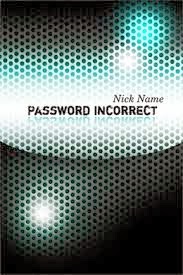
Password Incorrect by Nick Name

How do I even begin to express my views on this book? If anyone has read it I’m sure they will appreciate my ambivalence. My initial reaction toward the book was this, that either the author is a sheer literally genius or has very little regard if any for editorial rules and/or writing styles.

Password Incorrect is a collection of short stories which is mostly choppy, humorous and quite frankly annoying at times especially when one is really getting engrossed in what would have otherwise been a juicy read only for the story to come to an abrupt ending leaving one in a cliffhanger.

However, that the stories are mostly witty in an absurd kind of way cannot be denied. The author's name is a telltale attestation to this. The stories also mostly carry undertones of playful mischief with such silly titles are Nose Number 32, Childult, Mr. Copypaste and Micro-Hockey (which so far happens to be my favorite.)

But on the whole, for one to even blog about it shows that the book is meritorious in its own right albeit of the fun yet idiotic sort.

It’s available for free online and on android devices for anyone interested to read it.

Enjoy!

Tuesday, July 23, 2013

Letter To Rachael

Dear Rachael,

My name is Michael Appiah-Duku. I’m a Ghanaian and live in Ghana in West Africa. I just finished reading your story which broke my heart, to say the least, yet didn’t find it shocking because in my country, it’s commonplace to find children of staunch Christians being wayward. In fact, people anticipate children of pastors or church elders to be bad.

I am myself the son of a pastor. I had to deal with an even stricter upbringing. But I must say it was your dad and his incredible site that really made much sense of Christianity to me while growing up and I’m ever grateful to God for that. And now that I’m old and with the benefit of hindsight, I’m grateful to God for a strict parent who obeyed God’s clear admonishing to “Train up a child in the way he should go; even when he is old he will not depart from it.” Pro. 22:6

This is what I have come to learn (and I am still learning and boy is there tons I got to know. I totally agree with Paul when he says “Oh, the depth of the riches and wisdom and knowledge of God! How unsearchable are his judgments and how inscrutable his ways!” Rom.11:33) that God is the only one who is all-knowing. If humans too were all-knowing, then we too will be God. But we’re not. Therefore, it isn’t prudent to want all the answers to all of life’s questions before you decide to believe. Then where is the element of mystery? Where is the trust? After all, He has said “The secret things belong to the LORD our God, but the things that are revealed belong to us and to our children forever, that we may do all the words of this law.” Deut.29:29. We are not to know everything. What God in his sovereignty has revealed to us should suffice!


One thing we also know as Christians is that God is good. Therefore, we can boldly assert that all that he permits to come our way must be for a good purpose though I admit it doesn’t often feel that way especially on this side of eternity. And that is fine because we’re finite. He is infinite! So it is all the more prudent to trust his judgment because he knows the end from the very beginning and he’s assured us that it’s good. Therefore we are hopeful. Jer.29:11.

And as for what you’re calling freedom, I think it’s just a chasing after the wind. You’re only allowing your natural (sinful) self to have its way. No restrictions. No self control. And I’m sure it’s must be exhilarating to be acting all happy-go-lucky but it’s just tantalizing because in the end it only leads to utter despair. If you wouldn’t even trust an African in some third world on his prognosis, I’ll encourage you to at least consider the words of someone who is touted by many as ‘the wisest man that ever lived.’ He did it all and tried and it all yet found hedonism utterly unfulfilling and pointless and in his despondence bellowed “Vanity of vanities, says the Preacher, vanity of vanities! All is vanity.” Eccl.1:2. I sincerely hope you’ll glean lessons from this wise man and repent. Do not wait till you suffer the same fate to grasp the lessons he learnt.

Well, as for me, I can only wish you well and pray that hat God will do for you what he did for Lydia: He opened her heart so that she gave heed to what Paul said (Acts 16:14). I do however admire your honesty and I believe it’s the first step towards repentance when you realized you truly didn’t believe.

May God be with you Rachel!

Soli Deo Gloria!!!!

Monday, June 17, 2013

Say "Amen"???

Question: If a non-Christian says to you “God bless you!”, will you respond “Amen”?

This was the was the question that popped into my head onetime when I observed that members of a group I belong to on whatsapp(social networking app for phones) seem to invariably respond “Amen” to quotes by other members regardless of the source of these quotes so much so that I had playfully tagged the group “Amen-Sayers”.

However upon brooding the matter a little further, I realized this propensity to say “God bless you” and its consequent “Amen” response seems to be engrained in our Ghanaian subconscious mindset. It appears to me that this statement seem to be a mere part of our lingo as a people because I find that Ghanaians (and I daresay all of mankind) are inherently religious and will therefore embrace any speech that invoke blessings. After all, who doesn’t want good things?

Anyway, I decided to run this by some of my friends to solicit their views. Those I asked almost unanimously said yes, that they’ll respond “Amen” to such a statement regardless of who it was coming from citing varying reasons for their stance some of which were compelling and others not. Some of the more compelling reasons they gave included the following:

- To Save Themselves the Trouble: Many people assume Ghana is a Christian state but it is not. I would however agree that we are a religious state. So to many of us, the idea that there are people who don’t believe in the existence of any deity is unbelievable. Atheism is practically non-existent in the mind of the average Ghanaian. So to save face, such people would rather just respond “Amen” to save themselves the trouble of having to explain the intricacies(if any at all) for their (non)belief.

- To Appear Respectable: It is typically considered rude to not respond to an otherwise benign invocation of blessings. After all, the person typically doesn’t deem his invocation as insulting or critical so to them it’s only natural to expect the recipient to reciprocate in a friendly and warm manner. Anything short of that is considered rude and no one wants to be tagged as such.

- To Appear Tolerant: Being a multi-religious state means coexisting with people of different faiths and therefore, people not wanting to appear fundamentalist or fanatic, will just respond “Amen”. The main idea is to appear accommodating and peace loving.

- It’s Biblical: Some stated categorically that the Bible supports responding in the affirmative. Others took a rather passive approach stating the Bible does not condemn it so why not just respond in the affirmative?

However, I personally do not respond in the affirmative to such invocation of blessing even from certain ‘Christian’ circles. I usually just smile to their kind gesture and it ends there. Here are my reasons why.

Firstly, I don’t think it’s intolerant or rude to stand by what one believes. I think it’s a matter of how one crafts his response or otherwise that can come across as rude. So to me, to cower from adhering to one’s faith when it means one will appear to be dissenting doesn’t make one intolerant but makes one insincere and also smacks of cowardice. I think that is even more dangerous.

Secondly, many Christians easily let their guards down whenever anybody at all invokes God in whatever venture (however nebulous such a venture may be). Many Christians seem to forget the biblical admonition that we’re to “Be sober-minded; be watchful…” because “Your adversary the devil prowls around like a roaring lion, seeking someone to devour.”(1Pet.5:8). We forget that the “even Satan disguises himself as an angel of light.”(2Cor.11:14) so that we shouldn’t just assent to any pronouncement of ‘blessings’ just because it’s in the name of God. We’ll be displaying gullibility if we do.

Thirdly, what or who does the non-Christian mean by ‘God’? Many Christians are unaware that not all who profess belief in ‘God’ refers to the one and the same deity Christians worship. Christians believe in the existence of one God who is the creator of all things and who is a Trinity of persons and is sovereign over all things. But not all believe like the Christians do so how and/or why will you assent to invocation by someone when you’re not even sure if they’re referring to the same deity in whom you trust?

Fourthly, some of my respondents said the Bible supports it. They quoted such verses as “I will bless those who bless you, and him who dishonors you I will curse, and in you all the families of the earth shall be blessed.”(Gen.12:3) This verse does indeed appear to support the idea however, upon consulting Gill's Exposition of the Entire Bible he says concerning that verse that “… Not the priests only that should bless his children, the children of Israel, as the Targum of Jonathan, but all men of all nations, and of every age, that speak well of him, commend him for his faith and holiness, and tread in his steps, these are blessed with faithful Abraham…”

From the above commentary, it appears the understanding of the word ‘bless’ as used here denotes “to speak well of” or “approve of” instead of the usual “to confer prosperity or happiness upon” for how is it possible for an unbeliever to invoke blessings of a deity he does not know nor believe in on behalf of believers in that deity? It appears incongruous to me.

Given the above reasons, I wouldn’t affirm any invocation of blessings from any non-Christian source. Or will you respond ‘Amen’ to Kwaku Bonsam (a popular fetish priest in Ghana) if he says to you “God bless you?”

Let’s get talking.

Soli Deo Gloria!

Friday, April 19, 2013

To Battor And Back: Not A Safari!

Clinical referrals are often deemed ominous and such was my sentiment when I was referred to see a specialist for the treatment of a condition I was suffering. This news felt even more distasteful when the medic hinted I will require surgery to correct my condition.

Impelled by this news, I embarked on a trip to the Catholic Hospital at Battor in the Volta Region to seek health care. Though the trip wasn’t eventful, I was a bit apprehensive because it was my first time visiting that part of Ghana and so I feared I may lose my way but thankfully, that didn’t happen.

Upon arrival, I got to see the doctor after a tediously slow process of documentation and a long wait. The doctor was very friendly and after a short period of consultation, pronounced a grave diagnosis of my condition and immediately put me on admission. I knew he didn’t mean to frighten me with the diagnosis but that didn’t assuage my trepidation. Moreover, I didn’t take any extra clothes because I didn’t anticipate I will be admitted but I didn’t demur to the admission because by then I was feeling so weak and so it was only prudent I comply with the
specialist.

Though the news of my diagnosis was unpleasant to take in at first, it later dawned on me that what I initially considered ominous actually turned out to be a life saver because the doctor later told me that if I hadn’t come at the time I did, it would have been a different story all together which would have most likely ended with my demise. I was really thankful!

However, I had some reservations chief among them was with the ward sanitation. Though I hadn’t seen the whole compound (or at least the male ward), I reasoned that if it be anything like Korle-Bu then it’ll surely be unsightly and decrepit. And boy was I glad to find out it wasn’t anything of the sort. Though the facilities were not state-of-the-art, they were far better than the average (that is in comparison with other public health facilities I have ever visited) hospitals/clinics. But while I was on admission I was relived to observe that almost every morning there were janitors who mobbed the wards and corridors clean.

Another commendable thing I observed was the kind treatment I received from the nurses at the ward. I had heard many horrid tales from different people who were ill treated by certain callous and unscrupulous nurses while they were on admission at certain public hospitals. To many, this stereotype of rude nurses has become an idée fix but I was glad my experience at the hospital helped shatter that notion. The nurses were so accommodating and patience.
During this period news emerged of a possible strike action by doctors in public health facilities if certain conditions were not met by government. Though I had by then had my corrective surgery, the news was nonetheless disturbing because it will mean there’ll be no doctors to monitor my recovery and also other patients too would be denied crucial health care and will result in the inevitable loss of life. Anyway, I was relieved to find that the strike does not apply to the Catholic Hospital because it’s a mission facility (correct me if I’m wrong). It made me appreciate even more the many benefits that the Christian faith (and religion in general) has brought to mankind. Anyway, it was reported in the news today that talks between the doctors and the government still remain inconclusive. I sincerely hope both parties make concessions so that doctors can resume work to save precious lives of our people.

I am glad to announce I’m recuperating well and hopefully will adjust my lifestyle to a healthier one so the condition does not recur. A word of advice though to my cherished friends: please do well to go for regular check-ups so that any hidden ailment will be diagnosed and please if you’ve been diagnosed with any ailment, do well to seek early treatment to avoid any dire consequences.

Oh the vicissitudes of life but I’m glad to be back from my unplanned hiatus!

SDG!!!

Friday, January 11, 2013

FREE SHS IN GHANA: TO BE OR NOT TO BE?


If you live in Ghana or were monitoring the electioneering events during our recent general elections, I am sure that you couldn’t have missed out on one key message that resonated throughout the whole country among a plethora of other campaign messages and slogans.  This reverberating message was the issue of free Senior High School(SHS) education. 

Though all the political parties had policies on education, almost all carried the same promise of free SHS with the exception of the NDC who initially rejected the idea outright as being unachievable yet were compelled to quickly recant their position after a sound bite of their flag bearer making the same promise of free SHS to Ghanaians as far back as 2008 emerged.  In their attempt to save face and to mitigate their embarrassment, they grudgingly consented to the free SHS concept but with an added twist that they intend to implement it gradually over a certain time frame instead of its immediate implementation as proposed by the NPP.

Anyway, I’ll like to briefly address some of the populace objections that were leveled against the concept during the electioneering period.

Objection 1: It’s a desperate political gimmick intended to get NPP elected.
Well, it will appear so but not necessarily because, the concept is constitutionally mandated yet previous governments have failed to implement it whereas the NPP has identified our current educational need as a country as being dire and therefore has expressed a clear and urgent call to implement this policy now instead of some obscure future time! One may be suspect about their timing and even deem it opportunistic…but why not? Now is a good time as any other! It’s only that the NPP has made free SHS a matter of top priority and therefore bring it up for discussion at any given opportunity and rightly so!

Objection 2: There’s nothing free in this world. Therefore, ‘free’ SHS must be a hoax!
Well, I do agree that technically speaking, it’s not going to be free. Someone will have to bear the cost somehow in which case the NPP proposed that this cost must be borne by the government. So yes, to the government, it’ll certainly not be ‘free’ but from the perspective of the recipient, it’s certainly is free as the recipient is absolved from bearing the cost. It’s just like a student gaining a full academic scholarship. To such a student, tuition is free, but to the scholarship awarding institute, It’s certainly not free as they’re going to have to bear the cost(and the full one at that) to cater for the awardee. So here, I’ll simply summarize that it’s just a matter of perspectives!

Objection 3: It’ll cost too much so we cannot afford it.
This is the singular point which I deem as being worthy of any serious attention. The NPP were not forthcoming on how they intended to source funding for the implementation of the concept and this became their Achilles heel on which their opponents quickly cashed in to buttress their claim that the whole promise is one big gimmick. However, the NPP’s reticent attitude then didn’t seem to be much of a problem for me as I considered it a rather prudent act not divulging the nitty-gritty of how they intended to implement the concept for fear of their idea being stolen by their opponent. Moreover, I am assuming its implementation was most likely going to be on a pilot basis first in order to ascertain unforeseen challenges before it would have been implemented across the country.

Well, needless to say, the majority of Ghana’s electorate preferred the cheesy slogan “edey be kerrkerrr” of the NDC to the NPP’s “free SHS” which in my view is the more reason why we desperately need free SHS.  
Though this discussion is rather belated, the matter of quality and affordable education for all is timeless and deserve frank and constructive discourse at anytime no matter which government is in power. 

Long live Ghana!!